


Filing a Wrongful Death Lawsuit in Illinois: Deadlines, Damages, and Who Can Sue
Wed 22 Apr, 2026 / by Robert Parker / Wrongful Death
Last Updated: July 9, 2026
An Illinois wrongful death lawsuit must be filed within two years of the date of death under 740 ILCS 180/2 by the personal representative of the deceased’s estate. Damages include lost financial support, medical bills before death, funeral and burial costs, and loss of society and companionship, paid to the surviving spouse, children, or next of kin. There is no statutory cap on non-economic damages in most Illinois wrongful death cases.
Illinois wrongful death law allows surviving family members to recover compensation when someone dies because of another person’s negligence. The lawsuit is filed by the personal representative of the estate, but the damages flow to the surviving spouse, children, or next of kin under 740 ILCS 180/2.1. You have two years from the date of death to file, not from the date of the injury that caused the death, and the deadlines for some defendants run shorter.
This article provides general information about Illinois wrongful death claims and is not legal advice. Past results do not guarantee future outcomes. If you have lost a loved one and have questions about your situation, call us at 309-673-0069 for a free, confidential consultation.
Who Can File a Wrongful Death Lawsuit in Illinois
| Wrongful Death Act | Survival Act | |
|---|---|---|
| What it compensates | The losses suffered by the surviving family because of the death. | The losses the decedent personally suffered between the injury and death. |
| Who files | Personal representative of the estate (executor or administrator). | Personal representative of the estate (executor or administrator). |
| Who actually recovers | The widow / widower and the next of kin. | The estate itself (then distributed under the will or intestacy rules). |
| Typical damages | Pecuniary loss to next of kin: lost financial support, lost services, society and companionship; grief, sorrow and mental suffering for lineal next of kin (cases after May 31, 2007). | Decedent’s conscious pain and suffering between injury and death; medical bills incurred before death; lost wages from injury until death. |
| What it does not cover | The decedent’s own pain and suffering before death (that’s the Survival claim’s job). | The family’s grief and lost support (that’s the Wrongful Death claim’s job). |
| Why both are usually pleaded | The two claims compensate different losses owed to different parties. Trying them together captures the full picture, but courts often require separate verdict forms to keep the awards distinct. | |
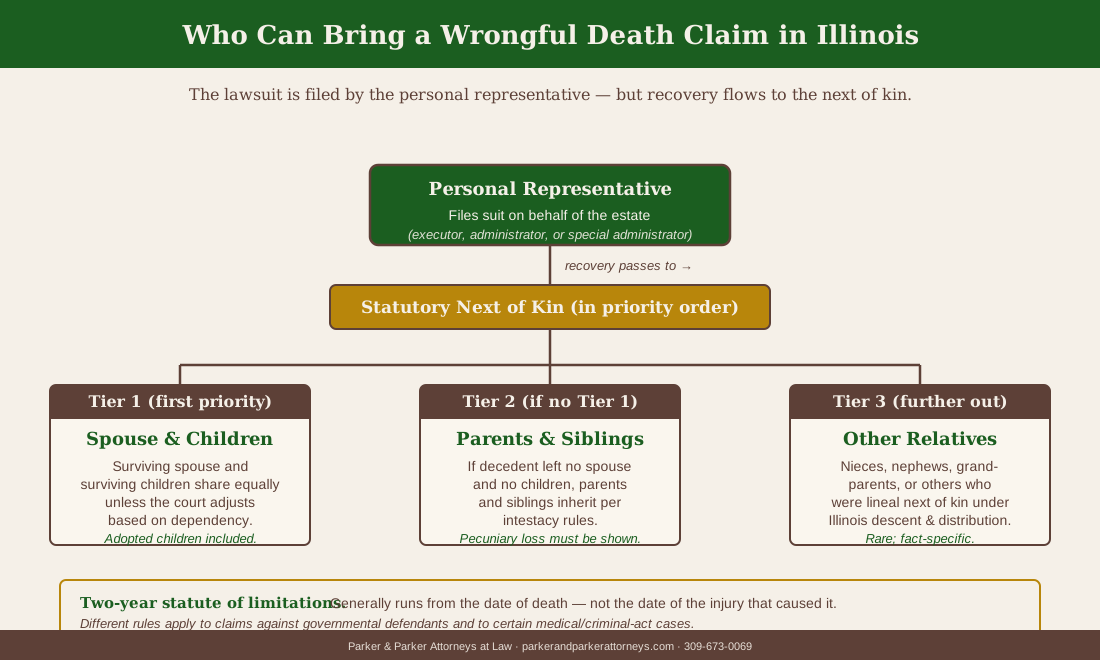
Under the Illinois Wrongful Death Act (740 ILCS 180), the lawsuit is brought by the personal representative of the deceased’s estate, usually the executor named in the will or, if there is no will, the administrator appointed by the probate court in the deceased’s county of residence (Peoria County Circuit Court, Tazewell County Circuit Court, or the appropriate venue).
The personal representative files the suit, but the recovery does not go to the estate. It is distributed to the deceased’s surviving spouse and next of kin in the proportions the court finds equitable, accounting for each beneficiary’s actual financial dependence on the deceased. The court, typically the Peoria County Circuit Court in Tenth Judicial Circuit cases, apportions the recovery as part of the settlement or post-verdict process.
For a deeper look at who specifically qualifies, see our post on who can file a wrongful death lawsuit in Illinois.
The Two-Year Deadline and Exceptions
The Illinois statute of limitations for wrongful death is two years from the date of death, not the date of the underlying injury, under 740 ILCS 180/2. This matters in cases where the injury and death are separated in time, a serious car accident in March 2024 that ultimately causes the victim’s death in February 2025 starts a new two-year clock from the death date.
Important exceptions to the two-year default:
- Discovery rule for delayed-discovery deaths. In medical malpractice and toxic exposure cases where the cause of death is not immediately known, the clock can run from the date the cause was or should have been discovered, subject to outer-limit repose periods. Medical malpractice wrongful death claims have particular complications under 735 ILCS 5/13-212, see our post on medical malpractice wrongful death for the deep dive.
- Minor beneficiaries. When the surviving beneficiaries include minors, separate tolling rules can apply to the minors’ individual recoveries.
- Government entity defendants. A wrongful death claim against a city, county, or Illinois agency runs on a one-year deadline under 745 ILCS 10/8-101, with formal notice often required even sooner. See our post on wrongful death claims against government entities in Illinois.
- Federal Tort Claims Act. Wrongful death involving a federal employee or facility (VA hospital, military base, federal contractor) requires an administrative claim filed within two years and follows different rules from the Illinois statute.
For the comprehensive treatment of deadlines and tolling, see our post on the Illinois wrongful death statute of limitations.
Damages in an Illinois Wrongful Death Case
The Illinois Wrongful Death Act allows recovery for the pecuniary injuries, the financial and relational losses, suffered by the surviving spouse and next of kin. The Illinois Pattern Jury Instructions break down the damages a jury can award:
- Lost financial support. Income the deceased would have earned and contributed to the family. In serious cases this is calculated by a vocational economist who projects future earnings, fringe benefits, and household services lost.
- Loss of society and companionship. The relational loss, companionship, guidance, parental presence, spousal partnership. IPI 31.04 instructs juries on the elements. There is no statutory cap on this category in most Illinois wrongful death cases.
- Loss of inheritance. What the surviving family members would have inherited had the deceased lived a normal life expectancy.
- Funeral and burial costs. Documented funeral, burial, or cremation expenses.
- Conscious pain and suffering before death. Recovered separately under the Survival Act (755 ILCS 5/27-6), not the Wrongful Death Act itself. The Survival Act preserves the deceased’s own claim for the harm suffered between the injury and the death; the Wrongful Death Act compensates the survivors for the death itself.
For the mechanics of how Illinois wrongful death settlements get calculated, see our post on how wrongful death settlements are calculated in Illinois.
Common Wrongful Death Cases in Peoria County
The wrongful death cases Parker & Parker handles in Peoria County and surrounding Central Illinois fall into a small number of categories:
- Fatal car accidents. Single-vehicle, head-on, intersection collisions on I-74, I-474, Route 150, and rural state routes. Often involve impairment, distraction, or commercial vehicles. See our post on wrongful death car accident claims in Illinois.
- Truck accidents. Federal regulatory framework, FMCSA hours-of-service, driver qualification, vehicle maintenance, overlays the state negligence claim. Carriers maintain higher policy limits, often $750,000 to $1M minimum on commercial lines.
- Nursing home neglect deaths. Sepsis from untreated pressure ulcers, choking deaths during unsupervised feeding, falls with fatal head injury, elopement deaths, medication errors. Governed by both the Wrongful Death Act and the Illinois Nursing Home Care Act (210 ILCS 45). Fee-shifting under 210 ILCS 45/3-610 affects the settlement calculus.
- Medical malpractice deaths. Failure to diagnose, surgical errors, medication errors, post-operative neglect. Different SOL framework under 735 ILCS 5/13-212. Certificate of merit required at filing under 735 ILCS 5/2-622.
- Pedestrian and bicycle fatalities. Distinct doctrinal issues, right of way, crosswalk law, dooring under 625 ILCS 5/11-1407. See our post on wrongful death claims after pedestrian and bicycle fatalities in Illinois.
- Workplace deaths. Workers’ compensation is the exclusive remedy against the employer, but third-party negligence claims (against equipment manufacturers, subcontractors, property owners) are often available. Coordination of the two systems is essential.
- Child wrongful death. Particular evidentiary and damages considerations, pecuniary support is often nominal but loss of society is substantial. See our post on wrongful death of a child in Illinois.
Wrongful Death vs. Survival Action
Two separate Illinois statutes apply when an injury causes death, and most wrongful death cases involve both.
- Wrongful Death Act (740 ILCS 180). Compensates the surviving spouse and next of kin for their losses caused by the death, financial support, society, companionship, funeral expenses.
- Survival Act (755 ILCS 5/27-6). Preserves the deceased’s own personal injury claim, pain and suffering experienced between the injury and the death, medical bills incurred before death, lost wages from the injury date through the date of death. The Survival Act recovery flows to the estate, where it is distributed under the will or by intestate succession.
The two claims are filed together in nearly every case, with damages allocated between them at settlement or by the jury. For the doctrinal distinction in detail, see our practice-page coverage of wrongful death vs. survival action in Illinois.
Frequently Asked Questions
How long after a death do I have to file a wrongful death lawsuit in Illinois?
Two years from the date of death under 740 ILCS 180/2. The clock runs from the death, not from the underlying injury that caused the death. Wrongful death claims against a government entity run on a one-year deadline under 745 ILCS 10/8-101, with formal notice often required even sooner. Don’t wait, investigation and record collection take time, and the shorter government deadline can pass before families realize a claim exists.
Who gets the money from an Illinois wrongful death settlement?
The recovery is distributed to the surviving spouse and next of kin in proportions the court finds equitable, based on each beneficiary’s actual financial dependence and relationship with the deceased under 740 ILCS 180/2.1. The estate receives the Survival Act portion of the recovery (pain and suffering before death), which is then distributed under the will or by intestate succession. Both pieces are typically resolved together.
Can I file a wrongful death lawsuit if my loved one died in a hospital?
Yes, when the death was caused by negligence. Hospital deaths frequently involve medical malpractice, failure to diagnose, surgical errors, post-operative neglect, and require a medical expert review (the Certificate of Merit under 735 ILCS 5/2-622) before the suit can be filed. The Illinois medical malpractice statute of limitations runs two years from the date the negligence was discovered or should have been discovered, with an outer four-year repose under 735 ILCS 5/13-212 in most cases.
What if the death was caused by a city, county, or state employee?
Wrongful death claims against an Illinois government entity run on a one-year deadline under 745 ILCS 10/8-101, and many require formal pre-suit notice within an even shorter window. The Local Governmental and Governmental Employees Tort Immunity Act provides various immunities and defenses unavailable in private claims. These cases are workable but require fast action, see our post on wrongful death claims against government entities in Illinois.
How much is an Illinois wrongful death case worth?
Recovery values vary enormously by the deceased’s age, earning history, family situation, and the nature of the negligence. A wrongful death case involving a working-age parent with significant lost income and minor children typically resolves in the high six figures or seven figures when liability is clear and policy limits exist. Cases involving the death of an older retiree without dependents or significant income loss recover less in pecuniary terms, but the loss-of-society damages remain substantial. Past results do not guarantee future outcomes; every case is fact-specific.
Lost a Loved One? We Can Help.
Free, confidential consultation. No fee unless we recover. Call 309-673-0069 or schedule online.
Related Articles
- Who Can File a Wrongful Death Lawsuit in Illinois?
- How Wrongful Death Settlements Are Calculated in Illinois
- Illinois Wrongful Death Statute of Limitations
- Wrongful Death Claims Against Government Entities in Illinois
- Wrongful Death of a Child in Illinois
- Wrongful Death Claims After Pedestrian and Bicycle Fatalities
- Peoria Wrongful Death Lawyer